







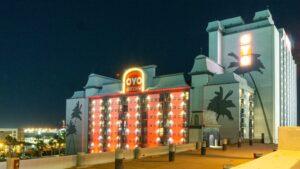
For many visitors to Las Vegas, OYO Hotel & Casino Las Vegas promises something simple. A low room rate, a central location near the Strip, and a place to rest between nights out. It is marketed as an affordable option for travelers who do not require luxury, but rather convenience. But affordability never comes with permission to cut corners on safety.
When guests are injured at OYO, the story is often the same. Elevators that stop suddenly or trap riders for long periods. Rooms are plagued by maintenance issues. Parking garages and hallways that feel unmonitored and unsafe. Guests who report problems and feel ignored. What begins as a budget-friendly stay can quickly become a frightening or painful experience that no one should have to endure.
If you were injured at the OYO Hotel & Casino in Nevada, state premises law gives you the right to demand accountability. Cheap room rates do not waive your right to a safe elevator, a secure environment, or a habitable hotel room. And recent events at this property have made one thing clear. Many of these injuries were not unavoidable accidents. They were the foreseeable result of systemic failures.
A Budget Hotel Still Owes a Full Duty of Care
Hotels in Nevada owe their guests the same legal duty of care regardless of price point. Whether a room costs fifty dollars or five hundred, guests are entitled to safe premises, properly maintained equipment, and reasonable security. The law does not create a separate standard for “budget hotels.”
At OYO, that duty of care has come under scrutiny in recent years as complaints have mounted about building systems that simply were not functioning as they should. Elevators are breaking down. Air conditioning failures. Plumbing leaks. Unsanitary rooms. Security gaps. These issues are not minor inconveniences. They are hazards that can cause real injuries, both physical and psychological.

The Elevator Crisis at OYO Las Vegas
The most serious and well-documented danger at OYO involves its elevators. Between 2024 and 2025, multiple reports surfaced of elevators operating without proper permits, being taken in and out of service unpredictably, and trapping guests inside for extended periods. For many visitors, this was not just stressful. It was traumatic.
Elevator entrapments can cause panic attacks, dehydration, and medical emergencies, especially for elderly guests or those with underlying health conditions. Sudden drops or hard stops can cause injuries to the neck, back, and joints. When elevators are not properly inspected, maintained, and permitted, every ride becomes a risk.
Under Nevada law, property owners and operators have a non-delegable duty to maintain elevators in safe working condition. This means they cannot simply blame a contractor or claim ignorance. If an elevator malfunctions due to inspections being skipped, permits not being obtained, or repairs being delayed, the responsible parties can be held liable.
If you were trapped in an elevator at OYO, injured during a sudden stop, or suffered severe anxiety or medical complications as a result, your experience matters. These incidents are not random. They point to negligent maintenance and oversight.

A Property in Transition: Who Is Actually Responsible?
One of the most confusing aspects of an injury at OYO is identifying who is responsible. Over the past few years, the property has been operated under a complex management structure, which underwent another change in late 2025.
For a significant period, hotel operations were managed by Highgate Hotels, while the casino floor was operated by Paragon Gaming. In late 2025, OYO corporate terminated Highgate’s management role, creating a shift in responsibility that directly affects injury claims.
If your injury occurred before the management change, liability may rest with Highgate, OYO corporate, or both. If it occurred after the transition, OYO corporate may be the primary defendant. If your injury happened on the casino floor, Paragon Gaming may also share responsibility.
This kind of corporate finger-pointing is common. Each entity tries to shift the blame to the others. Successfully pursuing compensation requires identifying who controlled the area where the injury occurred, who was responsible for maintenance or security at that time, and who carries the applicable insurance coverage. This is not something injured guests should have to untangle on their own.
Free Consultation We’ll help you win the benefits you need to get your life back.
The Closure of Hooters Does Not Erase Liability
For years, the Hooters restaurant was one of the most recognizable features of the property. Its closure in August 2025 does not erase injuries that occurred there before the doors shut.
If you slipped on a wet floor, were burned by hot food, or suffered food poisoning at Hooters while it was still operating, you may still have a valid claim as long as you are within Nevada’s two-year statute of limitations. Liability does not disappear just because a restaurant closes or rebrands. The responsible parties remain accountable for past negligence.
The same principle applies to other dining venues on the property. Restaurants like Steak ’n Shake operate in high-volume environments where spills, burns, and food safety violations can occur. When proper procedures are not followed, injuries become predictable.
Bed Bugs, Sanitation, and Habitability
Another recurring issue at OYO involves the condition of rooms. Guests have reported bed bugs, dirty rooms, and unsanitary bathrooms. Under Nevada law, hotels are required to provide habitable accommodations. That means rooms must be reasonably clean, free from infestations, and safe to occupy.
Exposure to bed bugs can lead to physical injury, allergic reactions, infections from scratching, and significant emotional distress. Hotels that fail to inspect rooms, respond promptly to complaints, or properly treat infestations can be held liable for the harm that results.
Sanitation failures are not merely uncomfortable. They are legal violations when they expose guests to health risks.
Parking Garage and Security Failures
OYO’s location along Tropicana Avenue creates unique security challenges. The property has open access points that require active monitoring. When security patrols are insufficient, lighting is poor, or access controls are lax, guests are placed at risk of assault, robbery, or harassment.
Negligent security claims arise when criminal activity is foreseeable and could have been prevented. Prior incidents, guest complaints, and the nature of the surrounding area all factor into whether a hotel should have taken stronger measures. If you were assaulted or threatened in the parking garage or common areas, the hotel may be responsible for failing to provide reasonable protection.
The Data Breach as Evidence of a Pattern
In January 2025, OYO disclosed a significant data breach affecting guest information. While data breach claims often proceed as class actions, the incident is relevant in another way. It demonstrates a broader pattern of operational negligence.
When a company fails to protect sensitive guest data, it raises serious questions about how it manages other critical systems, including maintenance, security, and safety protocols. In personal injury cases, this pattern can strengthen claims that the company consistently failed to meet basic standards of care.
Reporting an Injury at OYO
If you are injured at an OYO property, report the incident immediately and request documentation. Take photographs of the hazard if possible, especially elevator conditions, wet floors, broken fixtures, or security issues. Seek medical attention promptly, even if injuries seem minor at first. Avoid signing statements or accepting compensation without legal advice.
Because management has changed, reporting channels may be unclear. That confusion should not be used against you. The obligation to document and respond to injuries remains with the property and its operators.
Why Shook & Stone Takes OYO Cases Seriously
Shook & Stone does not treat injuries at budget hotels as “small cases.” An elevator malfunction at an affordable property can be just as dangerous as one at a luxury resort. A security failure can be just as traumatic. We are tracking the maintenance history, permit issues, and management transitions at OYO specifically.
Our firm knows how to navigate corporate chaos. We identify the correct defendants, preserve evidence before it disappears, and refuse to let companies hide behind management changes or closed venues. We represent injured guests with the same intensity regardless of where their injury occurred.
You never pay us up front. We only get paid if we recover compensation for you.
Your Safety Is Not Optional
OYO Hotel & Casino markets itself as affordable, but affordability does not excuse neglect. Elevators must work. Rooms must be clean. Security must be present. When those basic obligations are ignored, guests suffer the consequences.
If you were injured at OYO, trapped in an elevator, assaulted in a parking area, or harmed by unsafe room conditions, you have rights under Nevada law. Do not let corporate blame games stop you from seeking justice.
Free Consultation: Trapped in an Elevator or Injured at OYO? Call Shook & Stone Today at (702) 570-000. We are available 24/7 to help you understand your options and protect your future.
Learn more about Las Vegas Premises Liability Lawyers, Hotel & Casinos.



 DIRECTIONS