








Knowing the Right Moment to Bring in Legal Help After a Workplace Injury
Key Takeaways: An injured Las Vegas worker should generally hire a workers’ compensation attorney when a claim becomes complicated, a benefit is denied, or an injury is serious enough to affect long-term earning ability. Nevada operates a no-fault system under NRS chapters 616A through 617, but strict deadlines apply, including written notice to your employer within 7 days and a Form C-4 claim within 90 days. Warning signs that representation is wise include denied or delayed claims, severe or permanent injuries, disputed disability ratings, contested work-relatedness, and conflicts over medical care or vocational rehabilitation. Small, clean claims with undisputed facts may not require a lawyer, while serious or contested ones usually benefit from professional guidance. When timing or complexity is uncertain, a brief consultation can preserve options that might otherwise disappear.
An injured Las Vegas worker should consider hiring an attorney as soon as a claim becomes complicated, a benefit is denied, or an injury affects long-term earning ability. Many minor injuries with undisputed facts resolve smoothly without legal help, but when a deadline, denial, or dispute over medical care arises, professional guidance can protect benefits you might otherwise lose. This article explains the practical signposts that indicate when calling a lawyer makes sense under Nevada law.
If you are unsure whether your situation calls for representation, the team at Shook and Stone is ready to help you weigh your options. Call our office at 702-570-0000 or reach out through our online consultation request to discuss your work injury today.
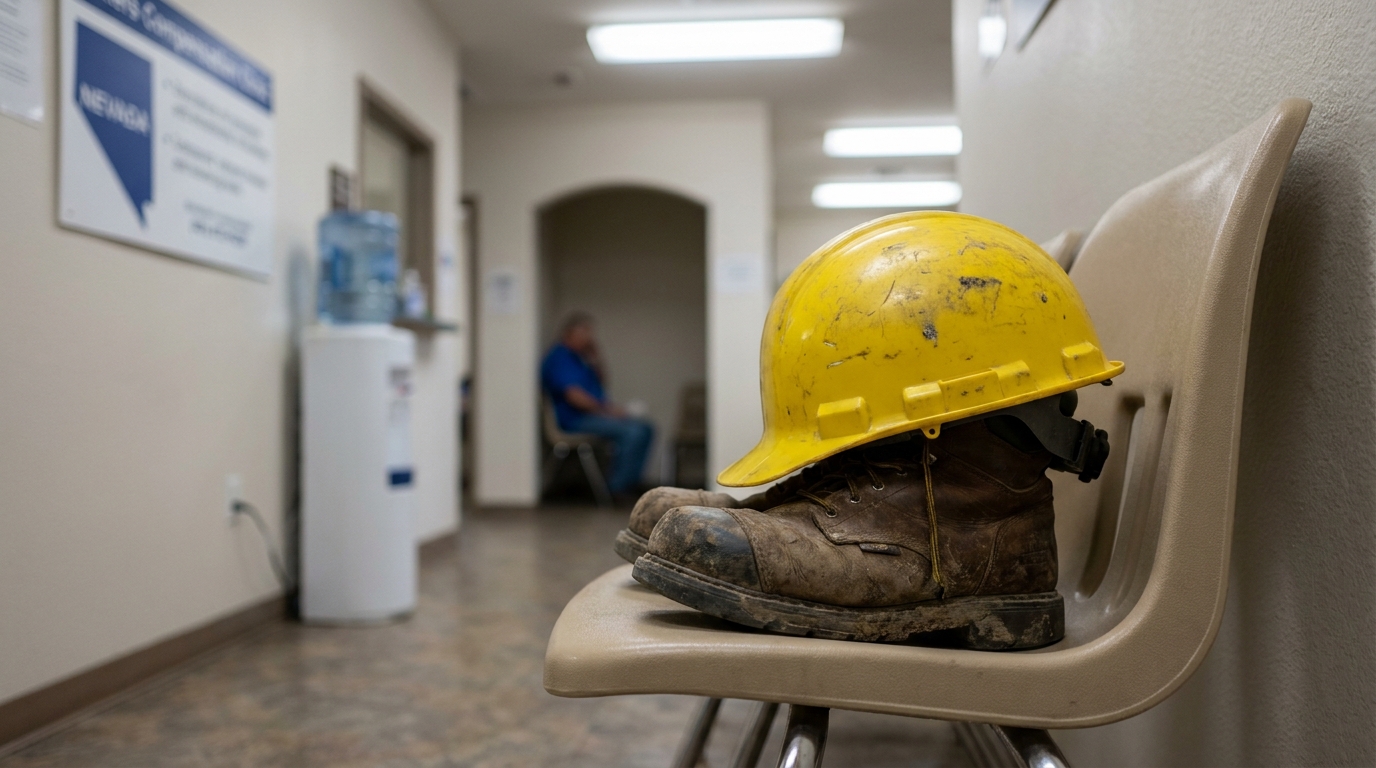

The Nevada Framework That Shapes Every Claim
Nevada workers’ compensation operates under a defined statutory structure that gives injured employees specific rights and benefits. The system draws from the Nevada Industrial Insurance Act and the Nevada Occupational Diseases Act, codified across NRS chapters 616A through 617. Reviewing the Nevada Revised Statutes for workers’ compensation can help you understand the legal foundation before speaking with a lawyer.
Nevada’s system is no-fault, which surprises many workers. Fault or negligence by either employer or employee is not considered in evaluating benefit claims. You generally do not need to prove your employer did something wrong, but you must prove the injury arose from your job, which is where documentation and procedure become critical.
💡 Pro Tip: Save every document connected to your injury, including incident reports, medical records, and pay stubs. A complete paper trail often makes the difference between an approved and a contested workers comp claim in Nevada.

Deadlines That Can Quietly End a Claim
Missing a filing deadline is one of the fastest ways to lose otherwise valid benefits. Nevada law sets strict, short windows for reporting and filing. Under NRS 616C.015, written notice of an injury must generally be provided to your employer within 7 days after the accident, and under NRS 616C.020, a formal claim for compensation using Form C-4 must generally be filed within 90 days. Failing to file timely may result in a denial of benefits.
These administrative deadlines are separate from civil court statutes of limitations. Courts tend to interpret exceptions such as tolling or delayed-discovery rules narrowly, so you should not assume any extension applies automatically. When timing is uncertain, early legal advice can preserve options that later disappear.
| Action | General Deadline | Governing Statute |
|---|---|---|
| Report injury to employer | Within 7 days | NRS 616C.015 |
| File claim for compensation (C-4) | Within 90 days | NRS 616C.020 |
| Insurer/TPA must accept or deny overall claim | Within 30 days of notification of the industrial accident | NRS 616C.065 |
| First TTD payment after acceptance of a lost-time claim | Within 14 working days | NRS 616C.475(3) |
Free Consultation We’ll help you win the benefits you need to get your life back.
Signs You May Need a Las Vegas Work Injury Attorney
Certain warning signs strongly suggest that hiring a work injury attorney in Las Vegas is the wise move. While each case turns on its own facts, the following situations commonly justify professional representation:
- Your claim was denied, delayed, or only partially accepted
- Your injuries are severe, permanent, or catastrophic
- You disagree with a permanent partial disability rating
- The insurer disputes whether your injury is work-related
- You need vocational rehabilitation and the claim is being contested
Severe and complex cases are exactly where guidance matters most. Situations involving severe, permanent, or catastrophic injuries, difficult issues of proof, problems with evidence, or the need for additional witnesses generally call for a lawyer. You can review these dynamics through Nolo’s personal injury claim guide, keeping in mind that workers’ compensation follows its own Nevada-specific rules.
Disputes over benefit categories also drive workers to seek counsel. Nevada workers may be entitled to medical treatment, lost-time compensation, permanent partial disability, vocational rehabilitation, dependent’s payments in death cases, and other claims-related expenses. Conflicts over any of these benefits are among the most frequent reasons injured workers reach out for help.
💡 Pro Tip: If you receive a written denial, note the date immediately. Nevada’s appeal windows are short, and acting quickly preserves your right to challenge the decision.
When Handling a Claim on Your Own May Be Reasonable
Not every workplace injury requires an attorney. For straightforward matters, settling directly with the insurer can be manageable. A case is often simple when facts are not in dispute, injuries or losses are minor, you made a complete recovery, and no difficult legal issues exist.
The threshold shifts as your losses grow. Many resources suggest discussing your situation with a lawyer once injuries become significant or total losses exceed a few thousand dollars. Small, clean claims may not need representation, while serious or contested ones usually benefit from it. Understanding when to hire a workers comp lawyer can help you decide what to look for if you move forward.
How Benefits Are Calculated and Why It Matters
Knowing how your benefits are calculated helps you spot when something is wrong. Temporary total disability, or TTD, generally equals 66 2/3 percent of your average monthly wage and becomes payable when a disability lasts five or more consecutive calendar days, or five cumulative days within a 20-day period. The insurer or TPA must generally accept or deny the overall claim within 30 days of being notified of the industrial accident under NRS 616C.065; however, once a lost-time claim is accepted, the first TTD payment must be made within 14 working days under NRS 616C.475(3).
Medical provider rules are another common source of conflict. In Nevada, injured workers are generally restricted to providers on the workers’ compensation approved contracted provider list, except in emergencies. Seeing an unapproved doctor risks leaving you responsible for the bill, so confirming network status early protects both your treatment and finances. A knowledgeable Nevada work injury attorney can help you challenge an underpaid TTD calculation or a wrongly rejected medical bill.
💡 Pro Tip: Ask your claims administrator for the approved provider list in writing. Keeping that list handy helps you avoid surprise charges and supports your medical evidence.
Researching Your Rights Before You Decide
You do not have to make this decision blindly, because Nevada offers free legal research resources. The Supreme Court of Nevada Law Library provides access to legal encyclopedias, plain-English dictionaries, and digital materials. The library’s public legal research toolkit describes free dictionaries and a national legal encyclopedia, and Nevada residents with a Supreme Court of Nevada Law Library card may access certain e-books and treatises remotely.
These tools inform you, but they do not replace tailored legal advice. The library cautions that its librarians are not members of the Nevada State Bar and nothing on the site should be considered legal advice. That limitation is why a worker with a contested or complex claim should consult a licensed professional. For deeper representation needs, our team handles injured worker legal help in Las Vegas across a wide range of injury types, and you can learn more from our dedicated Nevada work injury attorney resource page.
💡 Pro Tip: Use free legal dictionaries to decode unfamiliar claim terms before any hearing. Walking in with a clear grasp of the vocabulary helps you advocate for yourself.
Frequently Asked Questions
1. How soon after a work injury should I contact a lawyer?
Sooner is generally safer, especially when deadlines loom. Because notice is generally due within 7 days under NRS 616C.015 and a claim within 90 days under NRS 616C.020, early consultation helps ensure nothing is missed. Even if you ultimately handle a minor claim yourself, a brief conversation can confirm you are on track.
2. Do I have to prove my employer was at fault?
No, because Nevada workers’ compensation is a no-fault system. Fault or negligence by either party is not considered in your claim for benefits. You must show that the injury arose out of and in the course of your employment, which depends on medical documentation rather than blame.
3. What happens if my workers comp claim in Nevada is denied?
A denial is not necessarily the end of your case. Denials often trigger appeal rights under Nevada’s procedural timelines, and acting quickly is essential because those windows are short. This is one of the most common circumstances in which hiring a work injury attorney in Las Vegas can protect your benefits.
4. Can I choose my own doctor for a work injury?
Usually only within limits. Nevada generally requires treatment from providers on the approved contracted provider list, except in emergencies. Seeing an unapproved doctor may leave you responsible for the bill, so verify network status before scheduling care.
5. What benefits might I be entitled to receive?
Nevada law recognizes several benefit categories. These may include medical treatment, lost-time compensation, permanent partial disability, vocational rehabilitation, dependent’s payments in death cases, and other claims-related expenses. The exact benefits depend on your specific facts and injury severity.
Putting It All Together
The decision to hire a lawyer comes down to complexity, severity, and risk. Minor injuries with undisputed facts and full recovery may not require representation, but denials, serious or permanent injuries, disputed ratings, medical-provider conflicts, and looming deadlines all point toward seeking help. Because outcomes depend on each claim’s particular facts, this article offers general information rather than individualized legal advice. When in doubt, a short consultation can clarify where your case stands.
If your workplace injury feels too complicated to handle alone, the attorneys at Shook and Stone are prepared to guide you through every step of your Las Vegas workers compensation claim. Call us at 702-570-0000 or send a message through our confidential case review form to protect your rights and benefits today.






 DIRECTIONS