











Understanding Nevada’s Appeal Clock After a Workers’ Comp Determination
Key Takeaways: Nevada’s 70-day appeal deadline is the window an injured worker has to challenge a workers’ compensation insurer’s written determination by requesting a hearing before a Hearing Officer. Under NRS 616C.315, the clock runs from the date the insurer mailed its written determination, such as a D-30 claim acceptance or D-31a notice of intention to close. Appeals must be filed on the official D-12(a) Request for Hearing form with the Department of Administration Hearings Division, as letters and phone calls to an adjuster do not preserve your rights. Because Nevada’s no-fault system makes workers’ compensation the exclusive remedy against an employer, the administrative appeal is often the only way to correct a denial, claim closure, reduced disability rating, or stopped temporary disability checks. Missing the deadline may make the determination final, with limited exceptions interpreted narrowly.
The 70-day appeal deadline is the window Nevada gives an injured worker to challenge a written determination issued by a workers’ compensation insurer. Under NRS Chapter 616C, including NRS 616C.315, a worker who disagrees with an insurer’s written decision must request a hearing before a Hearing Officer within 70 days after the determination was mailed. Miss that window, and the determination may become final.
If you received a denial letter, a closure notice, or a disability rating you believe is wrong, the team at Shook and Stone can review your paperwork before the clock runs out. Call 702-570-0000 or reach out to our team today to discuss your options.

What Triggers the 70 Day Appeal Workers Comp Nevada Clock
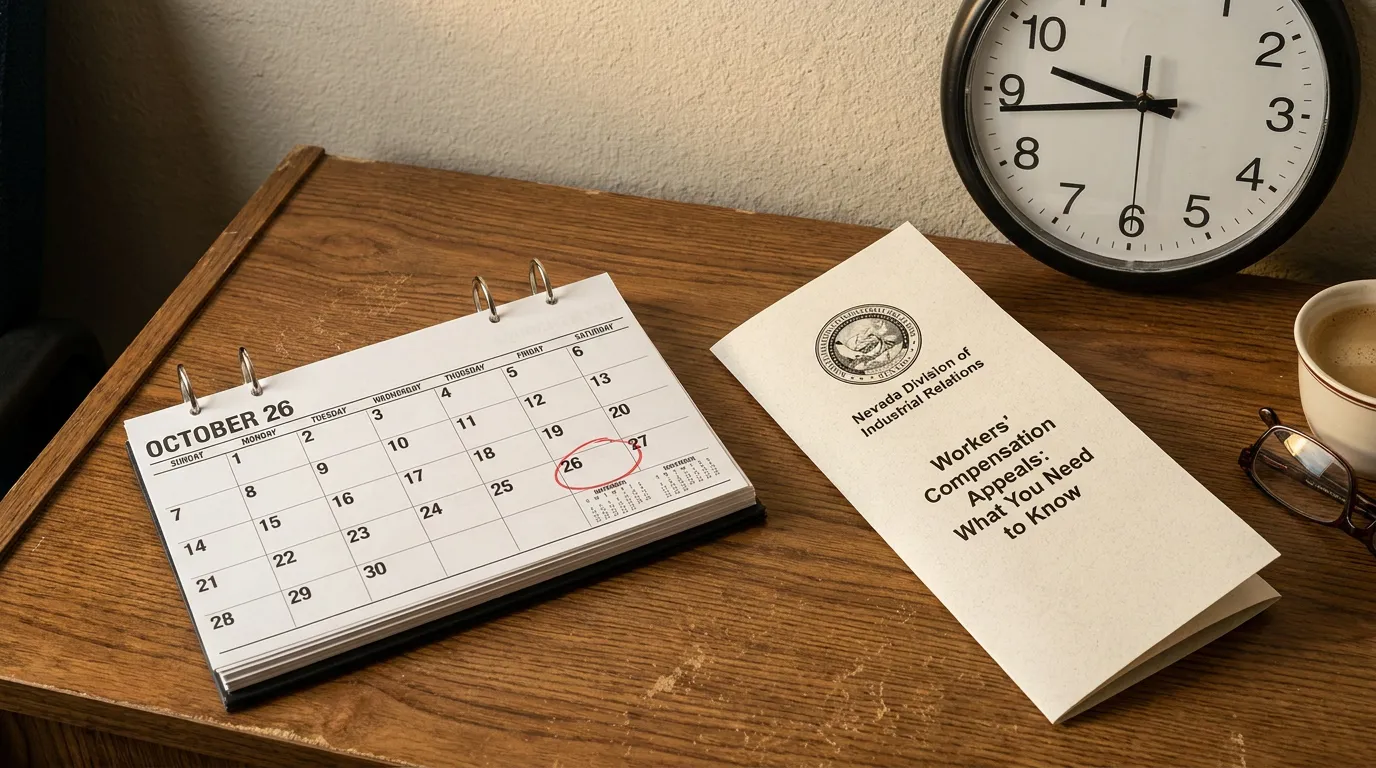
The appeal clock does not start when you get hurt; it starts when the insurer issues and mails a written determination. Nevada’s system runs on standardized state forms. Examples include the D-30 Notice of Claim Acceptance and the D-31a Notice of Intention to Close Claim, both revised in 7/25 by the state.
The date on the letter is the practical anchor for calculating your appeal window, though the statute keys the period to the mailing date. Keep the envelope and letter together and write down the day it arrived. A miscalculated deadline can cost you the right to be heard.
Common Determinations Workers Appeal
- Full or partial denial of a claim
- Notice of intention to close the claim
- Termination or reduction of temporary disability benefits
- Disputes over a permanent partial disability percentage
- Refusal to authorize recommended medical treatment
Disputes over medical findings are among the most frequent triggers. The employer or insurer generally directs the choice of treating physician from an approved provider list, and a rating physician assigns a percentage of permanent disability. A claimant who disagrees may obtain a second rating evaluation under NRS 616C.100. Note that disputes over treatment within a managed care organization may first require the insurer’s internal review process.

How the Nevada Workers Comp Appeal Deadline Fits the Larger Timeline
Nevada’s workers’ compensation system operates on short, unforgiving timeframes from the very first day. The State Bar of Nevada cautions that timeframes for filing such claims may expire within only days of an incident. The 70-day appeal right only exists once a claim has been filed and a written determination issued.
The C-1 Notice of Injury, the C-3 Employer’s Report, and the C-4 Employee’s Claim for Compensation start the process. You can find the complete set of workers’ compensation forms published by the state. After that paperwork produces a decision, the appeal timeline begins.
| Stage | Typical Document | What It Means for You |
|---|---|---|
| Injury reported | C-1 Notice of Injury | Notifies employer of the incident |
| Claim filed | C-4 Employee’s Claim | Opens the workers’ comp claim |
| Insurer decides | D-30 or D-31a | Written determination is issued |
| Worker appeals | D-12(a) Request for Hearing | Generally due within 70 days |
💡 Pro Tip: Calendar the deadline the day the letter arrives, and set a reminder two weeks earlier. Building in a buffer protects you if you need time to gather medical records or locate the correct form.
Free Consultation We’ll help you win the benefits you need to get your life back.
Filing the Right Form for a Nevada Comp Determination Appeal
Nevada requires an injured worker to appeal using an official state form rather than a letter or phone call. The correct document is the D-12(a) Request for Hearing – Contested Claim, currently dated 7/25, filed with the Department of Administration Hearings Division. Submitting the wrong document or sending it to the wrong agency may not preserve your appeal rights.
If the employer carried no industrial insurance, the state provides a separate D-12(b) Request for Hearing – Uninsured Employer, and those disputes generally bypass the Hearing Officer and go directly to an Appeals Officer.
Where Appeals Are Actually Heard
Workers’ comp appeals go to an administrative body, not a civil courtroom. The Workers’ Compensation Section of the Division of Industrial Relations regulates claims, but its workers’ compensation resource page routes injured workers to the Hearings Division for appeal rights. Both the Hearing Officer and Appeals Officer levels are handled by the Department of Administration, with judicial review in district court available only after administrative remedies are exhausted.
Administrative appeal deadlines are separate from ordinary civil statutes of limitations. The State Bar of Nevada describes the workers’ compensation appeals body as an administrative judicial entity that hears appeals and resolves disputes.
Why the No-Fault Bargain Makes the Deadline So Important
Nevada workers’ compensation is a no-fault insurance system, and that trade-off shapes appeals. The injured worker gives up the right to sue an employer for negligence in exchange for benefits covering lost wages, medical treatment, and permanent disability awards. Because a negligence suit against the employer is generally barred by exclusive remedy, the administrative appeal is often the only avenue to correct a decision.
The benefits at stake are real. Injured workers who qualify may receive temporary total disability payments of roughly two-thirds of their average monthly wage, subject to statutory caps, and an interruption in those checks can be financially devastating. When an insurer reduces or stops payments, the written notice starts the appeal window.
💡 Pro Tip: Do not stop treating with an authorized physician while an appeal is pending. Gaps in treatment are frequently used to argue that an injury resolved, and consistent records strengthen your position.
Practical Challenges That Cause Workers to Miss the Nevada Appeal Window
One of the most common reasons workers lose appeal rights is simply not recognizing that a letter was a determination. Insurance correspondence can look routine, and a Notice of Intention to Close Claim may not read like a decision requiring action. Workers recovering from surgery often set the mail aside.
Other obstacles include address changes that delay delivery, confusion about which agency receives the form, and the assumption that a phone call to the adjuster preserves the appeal. It does not. If you are unsure whether a document started a clock, consult a lawyer promptly.
When Deadlines Might Be Extended
Nevada law recognizes limited circumstances in which a late appeal may be considered, but these exceptions are interpreted narrowly. The period may be tolled where the insurer failed to give proper notice of appeal rights, and adjudicators may consider whether circumstances beyond the worker’s control prevented timely filing. Extensions are not automatic, and the burden falls on the worker to justify the delay.
Employers and insurers must provide plain-language rights documents, including the D-1 Informational Poster and the D-2 Brief Description of Your Rights and Benefits if You Are Injured on the Job. Whether those notices were properly delivered can become a factual issue.
Getting Help With a Denied Claim Appeal in Nevada
No worker has to navigate an appeal alone. Free representation may be available to eligible claimants through the Nevada Attorney for Injured Workers. Additional guidance is available through the State Bar of Nevada’s lawyer referral resources for injured workers.
Many injured workers choose private counsel, particularly when a permanent disability rating or long-term wage loss is disputed. A las vegas workers comp appeal lawyer can help gather medical evidence, prepare the hearing request, and present the claim before the Hearing Officer.
Frequently Asked Questions
1. Does the 70 day appeal workers comp nevada deadline start from the date I was injured?
No. The window runs from the date the insurer mailed its written determination, not the date of injury. Separate and much shorter deadlines apply to reporting the injury to your employer and filing the initial claim.
2. What happens if I miss the 70-day window?
A determination that is not timely appealed may become final and binding. In limited circumstances, such as failure to give proper notice of appeal rights, an adjudicator may consider a late filing, but such exceptions are applied narrowly and never guaranteed.
3. Can I appeal more than one determination on the same claim?
Yes. Each written determination carries its own appeal deadline. A claim may be accepted, later closed, and separately rated, with each decision triggering a new window. Track every letter individually.
4. Do I need a lawyer to file the D-12(a) form?
No, the form is designed for injured workers to complete without counsel. However, hearings involve medical evidence, cross-examination, and statutory standards that can be difficult to manage while recovering. Representation may be helpful in contested disputes.
5. Is the Hearing Officer’s decision the end of the process?
Not necessarily. Nevada’s system provides for a further appeal to an Appeals Officer, which must typically be filed within 30 days of the Hearing Officer’s decision. Judicial review may follow. The specifics depend on your case.
Protecting Your Rights Before the Clock Runs Out
Nevada’s 70-day appeal window is short, strictly applied, and easy to overlook when you are focused on healing. It begins with the mailing of a written determination from the insurer, requires a specific state form, and is decided by an administrative body. Understanding what counts as a determination, which form applies, and where to file may give you a better chance of preserving your benefits.
If a determination letter arrived and the days are slipping away, the attorneys at Shook and Stone are ready to review your claim. Call 702-570-0000 or schedule your free consultation now to protect your appeal rights.
Disclaimer: This content is for informational purposes only and is not legal advice. Every case is unique, and results may vary. Consult an attorney about your specific circumstances.




 DIRECTIONS