











When a Routine Shift Ends in Tragedy: Nevada’s Fall-Related Workplace Deaths
Key Takeaways: In Nevada, falls, slips, and trips account for nearly one in five workplace deaths, making them among the most serious workplace hazards. These fatal falls often trace back to preventable hazards like wet floors, broken stairs, or missing handrails that employers had a duty to correct under Nevada OSHA standards. Injured workers and families have legal avenues for recovery, including premises liability claims under NRS 41.130 and wrongful death protections. Injuries must typically be reported to employers in writing within seven days and workplace fatalities to state authorities within eight hours. Strict statutes of limitations apply, for workplace injury civil claims in Nevada the deadline is generally two years from the date of injury under NRS 11.190(4)(e), with shorter deadlines (such as 90 days or six months for notices of claim) applying to claims against government entities.
A fall on the job is not always a minor mishap. In Nevada, falls, slips, and trips account for nearly one in five workplace deaths. For tradespeople, hospitality staff, warehouse crews, and service workers across the Las Vegas Valley, a single misstep on a wet floor or broken stair can turn an ordinary shift into a life-altering or fatal event. Understanding why these incidents happen and what legal protections exist is the first step toward accountability and recovery.
If you or a loved one suffered a serious or fatal fall on the job, the team at Shook and Stone is ready to help. Call 702-570-0000 or use our online case review form to discuss your situation.

Worker’s Comp Guide Your guide to navigating the legal process & getting the compensation you deserve. Download FREE eBook
Why Falls Dominate Nevada Workplace Fatalities
Falls remain a leading killer on Nevada job sites because they occur across nearly any industry. Elevated work, slick surfaces, and cluttered walkways create conditions where a momentary loss of balance carries deadly consequences. Falls from height or onto hard surfaces can cause fatal head trauma, spinal damage, or internal injuries.
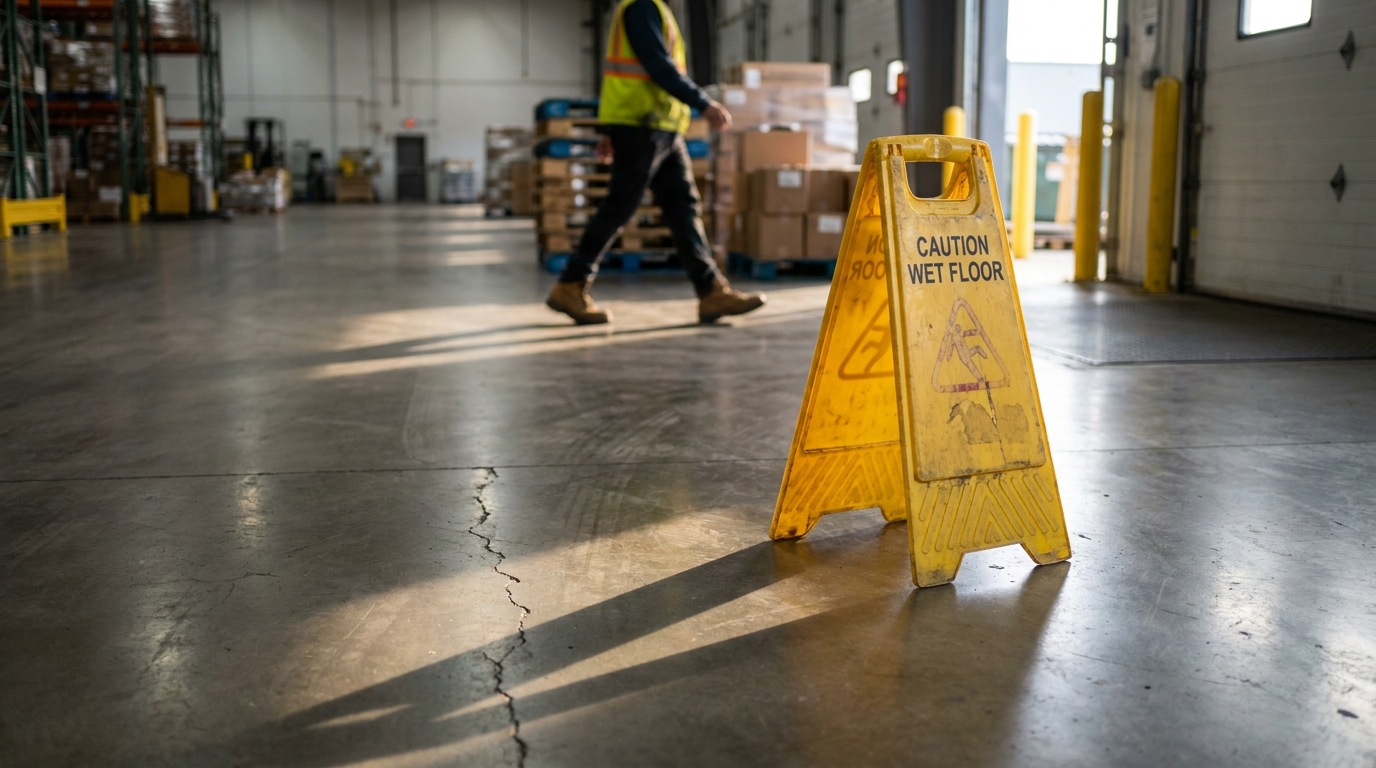
These fatal workplace falls are rarely random accidents. They typically trace back to preventable hazards that should have been identified and corrected. Slip and fall hazards include wet floors, icy sidewalks, uneven surfaces, torn carpeting, or cluttered walkways. Inadequate maintenance includes broken stairs or handrails, deteriorating ceilings or floors, and malfunctioning elevators or escalators. Each reflects a breakdown in safety that an employer or property controller had a duty to address.
💡 Pro Tip: If you witness a recurring hazard such as a leaking pipe or loose handrail, report it in writing and keep a copy. Documentation created before an injury can become powerful evidence later.
Common Hazards Behind Fatal Falls
Recognizing the patterns behind workplace death statistics helps workers stay alert to risks. While every job site differs, certain conditions repeatedly contribute to serious fall injuries.
- Wet, oily, or freshly mopped floors without warning signage
- Uneven flooring, torn carpeting, or damaged thresholds
- Broken stairs, missing handrails, or poorly lit stairwells
- Cluttered walkways and unsecured cords or equipment
- Malfunctioning elevators, escalators, or scaffolding
Nevada’s safety framework is designed to reduce these dangers. Nevada OSHA safety standards are enforced through the Division of Industrial Relations to hold employers accountable for maintaining safe workplaces. When those standards are ignored, catastrophic falls become more likely. Reviewing workplace safety practices can help workers and supervisors spot problems before they cause harm.

The Legal Foundation for a Slip and Fall Injury at Work Claim in Nevada
Nevada law provides injured workers and families with established avenues for recovery after a slip and fall injury at work. Under Nevada’s personal injury statute, NRS 41.130, when a person suffers injury through another’s wrongful act, neglect, or default, the party causing the injury is generally liable for damages, subject to exceptions in NRS 41.745. Under Nevada’s workers’ compensation system, a covered employer is generally immune from direct negligence lawsuits by its own employees, so NRS 41.130 most often applies to third-party claims.
That statute extends responsibility to employers in certain circumstances. NRS 41.130 provides that where the person causing injury is employed by another person or corporation responsible for that conduct, the employer may also be liable. This principle can matter significantly in workplace fall cases involving non-employer parties, though outcomes depend on specific facts and party relationships.
💡 Pro Tip: Workers’ compensation and third-party negligence claims are not always mutually exclusive. In cases involving a non-employer property owner or contractor, both avenues may be available.
Premises Liability and Property Owners’ Duties
Premises liability is the branch of personal injury law most directly tied to fall, slip, and trip incidents. This area holds parties in control of property accountable for hazardous conditions. Nevada’s civil jury instructions include a dedicated premises liability chapter, providing families a recognized legal framework when a worker dies from a fall.
The duty owed depends on why the injured person was on the property. An invitee, someone invited for the possessor’s commercial benefit, has the highest protection. The owner must inspect for dangers, make prompt repairs, and warn of hazards. Whether a duty was breached is generally a fact-dependent question evaluated case by case.

Reporting Requirements After a Nevada Workplace Accident
Prompt reporting is both a legal obligation and practical safeguard after a serious workplace fall. Nevada maintains a structured reporting framework under NRS 616C.015, generally requiring injured employees to provide written notice to employers as soon as practicable, but within seven days after the accident, typically using a C-1 form. A separate claim for compensation (Form C-4) must generally be filed with the insurer within 90 days. When a workplace incident results in a fatality, supervisors must typically notify the State of Nevada Occupational Safety and Health Enforcement Section within eight hours.
Employers also bear ongoing documentation duties. Recordable workplace injuries are generally logged on the federal OSHA 300 Log, and supervisors typically conduct accident investigations and identify corrective measures. These records can become important evidence when proving how and why a fall occurred.
| Reporting Step | General Timeframe | Responsible Party |
|---|---|---|
| Report injury to employer (Form C-1) | As soon as practicable, within 7 days | Employee |
| Notify state safety authority of a fatality | Within 8 hours | Supervisor |
| Conduct accident investigation | Within a few days | Supervisor and safety officer |
| Add recordable injury to OSHA 300 Log | After determination | Human resources |
💡 Pro Tip: Timeframes vary based on your employer and circumstances. Treat these as general guidance and confirm exact deadlines early.
Workers’ Compensation Versus Civil Claims
Administrative reporting and civil lawsuits are separate processes. Workers’ compensation generally provides medical and wage benefits regardless of fault, while civil premises liability or wrongful death claims address negligence and broader damages. Because workers’ compensation is generally the exclusive remedy against a covered employer, civil negligence claims usually proceed against third parties. Nevada recognizes specific wrongful death claims, allowing heirs or a personal representative to pursue damages after a fatal incident. Whether one or both avenues apply depends on each case’s facts.
Free Consultation We’ll help you win the benefits you need to get your life back.
Deadlines That Can Make or Break Your Claim
Time limits are among the most unforgiving aspects of any injury or wrongful death matter. A statute of limitations sets a strict deadline to file a claim, and missing it can permanently bar recovery. For workplace injury civil claims in Nevada, this deadline is generally two years from the date of injury under NRS 11.190(4)(e), while claims against government entities often have much shorter notice periods (for example, 90 days or six months depending on the type of claim). These civil deadlines are separate from workers’ compensation reporting deadlines, which can be far shorter.
Tolling and discovery rules do not apply automatically. In limited circumstances, a deadline may be extended, but these exceptions are fact-specific and not guaranteed. Because the consequences of a missed deadline are severe, seek guidance from a slip and fall injury at work lawyer well before any deadline approaches.
Frequently Asked Questions
-
Can I file both a workers’ compensation claim and a civil lawsuit after a workplace fall?
In some cases, yes. Workers’ compensation generally applies regardless of fault, while a civil claim may be available when a third party, such as a property owner or outside contractor, contributed to the hazard. Because workers’ compensation is usually the exclusive remedy against your employer, civil claims typically target third parties. -
Who can pursue a claim if a family member dies in a workplace fall?
Nevada recognizes wrongful death claims that may be brought by heirs or a personal representative of the estate. Eligibility and damages depend on the relationship to the deceased and circumstances. -
What deadline applies to a slip and fall at work in Nevada?
For civil workplace injury claims, the statute of limitations is generally two years from the date of injury under NRS 11.190(4)(e). Claims involving government entities can carry much shorter notice periods. Workers’ compensation has its own short deadlines, including written notice to the employer within seven days. Confirming your specific deadline early is critical. -
What evidence helps prove a fatal workplace fall was preventable?
Accident investigation reports, OSHA 300 Log entries, maintenance records, photographs of the hazard, and witness statements can all support a claim. Evidence created close to the incident is generally most persuasive. -
Does reporting my injury to my employer protect my legal rights?
Timely reporting is generally required and helps preserve your claim, but reporting alone does not resolve questions of fault or compensation. Outcomes depend on the facts and applicable law.
Standing Up for Injured Workers and Grieving Families
Falls, slips, and trips will likely remain a major source of Nevada workplace fatalities until preventable hazards are taken seriously. When an employer or property controller fails to maintain safe conditions, injured workers and families of those who did not survive deserve a clear understanding of their rights. From premises liability and NRS 41.130 to wrongful death protections and reporting obligations, the legal framework exists to hold negligent parties accountable.
If you are facing the aftermath of a serious or fatal workplace fall, Shook and Stone is prepared to listen and explain your options. Call our team today at 702-570-0000 or schedule your confidential consultation to take the next step toward protecting your family’s future.





 DIRECTIONS