











Understanding What Nevada Workers’ Comp Actually Pays For
Key Takeaways: Nevada workers’ compensation does not cover pain and suffering because it operates as a no-fault, exclusive-remedy system providing defined statutory benefits instead of tort-style damages. Injured workers receive medical care, wage replacement, and permanent partial disability awards calculated through standardized state worksheets and whole-person impairment percentages rather than subjective measures of emotional distress. Workers’ comp is generally the exclusive remedy, so employees usually cannot sue their employer for non-economic damages, though limited third-party claims against non-employers may sometimes be available. Protecting your benefits depends on promptly reporting the injury, completing required forms, and documenting every affected body part. Disputes are handled through an administrative appeals process with firm deadlines, and closed claims can be reopened only with proof of changed circumstances.
Nevada workers’ compensation does not pay for pain and suffering in the way many injured workers expect. Instead, it delivers defined statutory benefits, medical care, wage replacement, and disability awards, calculated by formula rather than by a jury’s assessment of emotional distress. Nevada’s workers’ compensation benefits are codified in Nevada Revised Statutes chapters 616A through 617 and the Nevada Administrative Code, meaning compensation categories are spelled out in law rather than left open-ended.
If you are navigating a confusing claim, the team at Shook and Stone is ready to help. Call us at 702-570-0000 or reach out through our online case review form.
💡 Pro Tip: Before assuming what you can recover, ask your treating physician to document every body part affected by your injury. Benefits are tied to medically supported conditions, so thorough records protect your claim.
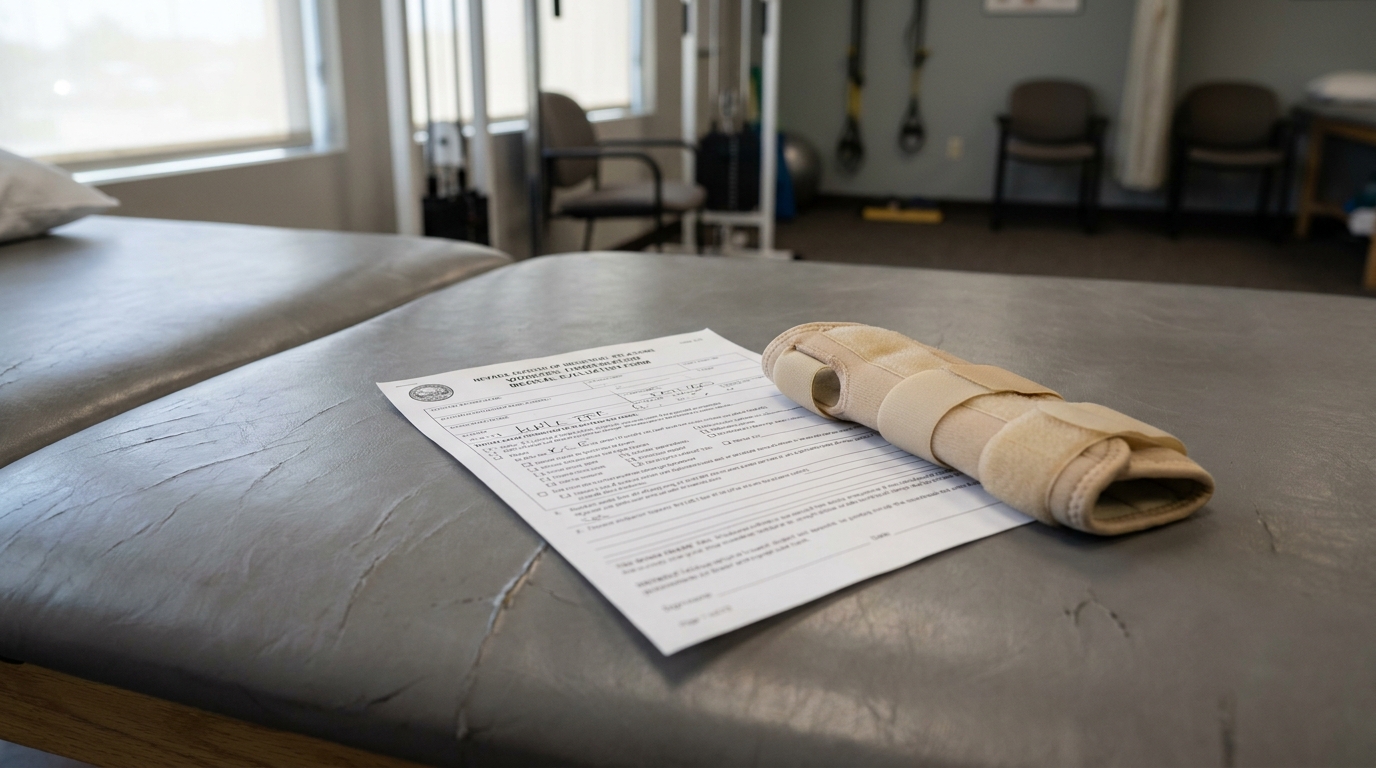

Can I Sue My Employer for Pain and Suffering After a Workplace Injury?
The question "can i sue my employer for pain and suffering" is one of the most common concerns among injured workers, and the answer is rooted in Nevada’s no-fault structure. Workers’ compensation is generally an exclusive remedy, meaning that in exchange for guaranteed statutory benefits regardless of fault, employees usually give up the right to sue their employer for tort-style damages like pain and suffering.
This trade-off explains why the system feels different from a personal injury lawsuit. In a typical car accident or premises case, an injured person may pursue pain and suffering against an at-fault party. In a workers’ comp claim, the focus shifts to medical treatment, lost wages, and disability percentages. To better understand how these paths diverge, review the difference between Nevada workers comp pain and suffering and a civil claim.
There are limited situations where a separate civil action may be possible, but these are narrow and fact-dependent. For example, an injured worker may sometimes pursue a third-party claim against someone other than the employer, such as a negligent equipment manufacturer or non-employer driver. In rare cases, an exception to the exclusive-remedy bar may apply where an employer’s conduct is alleged to be intentional, though Nevada courts construe such exceptions very narrowly.

How Nevada Pays for the Lasting Effects of an Injury
Instead of pain and suffering, Nevada compensates permanent effects through a permanent partial disability award. This is a formula-based benefit rather than a discretionary payout. In one Nevada Supreme Court matter, a claimant was evaluated for a permanent partial disability rating that found a nine-percent whole-person impairment overall, leading to a nine-percent PPD award. You can review the reasoning behind that whole-person impairment ruling.
The math behind these awards comes directly from standardized state worksheets. Nevada workers’ comp compensation is calculated using standardized worksheets tied to disability percentage, not subjective pain and suffering. The state provides distinct worksheets depending on impairment severity:
- Form D-9a for disability up to and including 30 percent body basis (for most injury date cohorts)
- Form D-9b for disability greater than 30 percent body basis
- A separate impairment rating worksheet (Form D-9(c)) for stress-based claims accepted pursuant to NRS 616C.180; Form D-35 is Nevada’s general impairment rating request form used for all PPD evaluations.
Note that for claimants injured on or after January 1, 2016, NRS 616C.495 uses a 30 percent threshold for lump-sum election purposes, and the official DIR worksheets themselves reference 30 percent as the dividing line.
Nevada provides a specific worksheet even for stress-based claims, showing that compensable categories are statutorily enumerated under NRS 616C.180 rather than open-ended pain-and-suffering recovery. This formula-driven approach is one of the clearest signals that the system rewards documented medical impairment, not emotional hardship alone.
💡 Pro Tip: If you receive a PPD rating that seems low, you may have the right to question the impairment evaluation. The percentage directly affects your award, so accuracy matters.
Free Consultation We’ll help you win the benefits you need to get your life back.
Filing Your Claim the Right Way
Protecting your benefits starts with following Nevada’s reporting process promptly and correctly. Guidance directs injured workers to notify their supervisor and complete Form C-1, the Notice of Injury or Incident Report, and Form C-4, the Employee’s Claim for Compensation and Report of Initial Treatment. Missing these steps can jeopardize an otherwise valid claim. Nevada law generally requires notice of the injury to the employer within 7 days and the C-4 claim to be filed within 90 days of the accident.
Timely medical treatment is just as important as paperwork. Because benefits are tied to medically supported conditions, gathering documentation early helps establish that your injury is work-related. If your claim is denied or undervalued, having an experienced advocate can make a meaningful difference. Our injured worker compensation Las Vegas lawyer team regularly helps clients organize medical records and present strong claims.
💡 Pro Tip: Report your injury in writing as soon as possible. A verbal mention to a supervisor is easy to forget, but a dated written report creates a record you can rely on later.
What Happens When You Disagree With a Decision
Disputes in Nevada workers’ comp are resolved through an administrative appeals process, not a civil court awarding pain and suffering. Nevada employee guidance indicates that an insurer’s determination may be appealed to a Hearing Officer within 70 days, and a Hearing Officer’s decision may then be appealed to an Appeals Officer within 30 days, while disputes involving a managed care organization follow a separate complaint-resolution procedure. These deadlines are firm and strictly enforced.
Reopening a closed claim is possible but requires proof of changed circumstances. Reopening a Nevada workers’ comp claim generally requires a demonstrated change of circumstances primarily caused by the work-related injury, supported by a physician’s certificate. Benefits are tied to specific medically supported body parts or conditions. In one decision, the court clarified that a claim accepted for multiple body parts need be reopened only for those body parts for which a change of circumstances has been demonstrated. NRS 616C.390 governs reopening of closed claims.
The Workers’ Compensation Section operates as part of Nevada’s Division of Industrial Relations under the Department of Business and Industry, with regional offices including a Southern Nevada hub in Las Vegas. The agency ensures that Nevada workers injured on the job receive the benefits to which they are entitled. Learn more about the agency that oversees Nevada workers comp benefits directly from its official portal.
Why the System Works This Way
Nevada’s modern workers’ comp framework reflects a deliberate shift away from open-ended damages. Beginning in the 1980s, Nevada’s workers’ compensation program evolved from a monopolistic state-run program to a fully competitive market. Today, benefits are paid by private carriers and self-insurers under statutory schedules, not open-ended damages like pain and suffering.
Because the question "can i sue my employer for pain and suffering" comes up so often, it helps to remember the underlying bargain. Workers receive faster, more predictable benefits without having to prove employer fault. In return, the statutory categories define the limits of recovery. Whether you are dealing with a lifting injury, shoulder or neck condition, or another on-the-job injury in Nevada, the structure remains the same.
Frequently Asked Questions
-
Can I recover pain and suffering through workers’ comp in Nevada?
Generally, no. Workers’ comp focuses on statutory benefits like medical care, wage replacement, and disability awards. Pain and suffering is a tort concept tied to civil lawsuits, which the exclusive-remedy structure usually bars against an employer.
-
Are there ever times I can sue outside of workers’ comp?
In limited circumstances, yes. A third-party claim against a non-employer, such as a product manufacturer, may sometimes be available, and narrow exceptions to the exclusive-remedy bar may exist in rare cases. These situations are fact-specific and interpreted narrowly.
-
How is a permanent partial disability award calculated?
It is calculated using state worksheets based on a whole-person impairment percentage. The rating physician assigns a percentage, and that figure drives the award amount under standardized formulas rather than subjective measures of distress.
-
What deadlines apply if my claim is denied?
Deadlines are short and strictly enforced. An insurer’s determination generally must be appealed to the Hearing Officer within 70 days, and a Hearing Officer’s decision must be appealed to the Appeals Officer within 30 days. Prompt action protects your right to appeal.
-
Where can I confirm official Nevada workers’ comp information?
The Division of Industrial Relations oversees the system. Its Workers’ Compensation Section publishes the governing statutes, forms, and contact resources that explain how the program operates statewide.
Putting It All Together
Nevada workers’ comp is designed to deliver structured, statutory benefits rather than pain and suffering damages. The system pays for medical treatment, lost wages, and permanent partial disability calculated through state worksheets and impairment percentages, while disputes move through an administrative appeals process instead of a civil jury. For most injured workers, this means the practical question is not how to win non-economic damages, but how to maximize the benefits the law actually provides. Careful documentation and timely action remain your strongest tools.
You do not have to sort through these rules alone. The attorneys at Shook and Stone are ready to review your claim, gather the medical evidence you need, and stand with you through hearings and appeals. Call 702-570-0000 today or contact our team through our confidential consultation request to take the next step toward protecting your benefits.





 DIRECTIONS