
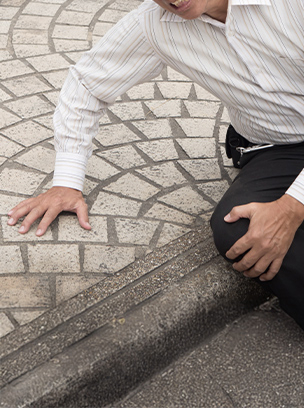

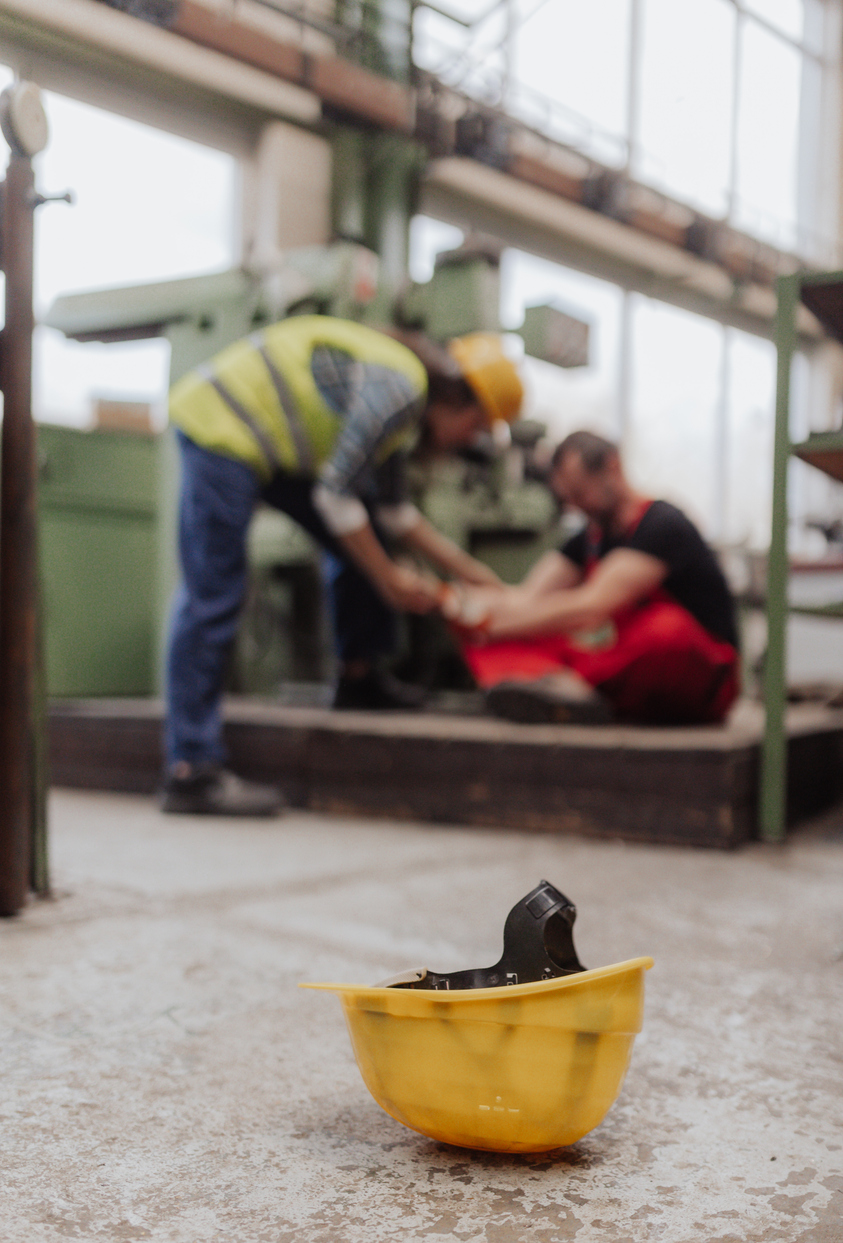





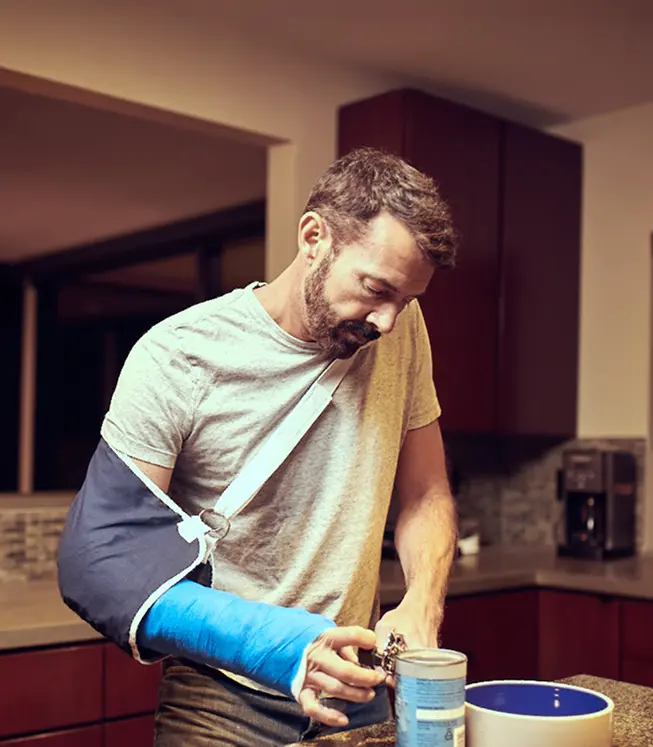
What is a slip and fall accident? A slip and fall accident occurs when a person slips, trips, or falls due to hazardous conditions, resulting in injuries.
Be sure to speak with a Las Vegas personal injury lawyer about your case today.
A Slip and Fall Accident Is a Personal Injury
Slip and fall accidents can occur on private, commercial, or other property owned by another person or entity. They occur when the owner knows or should have known about hazardous conditions and fails to take steps to correct them properly or warn of the risks. In these situations, a person may file a premises liability claim.
Premises liability is the legal concept that property owners have an obligation to ensure their premises are safe for those rightfully present. An owner may be liable for losses suffered by visitors or others when they fail to maintain the expected standard of safety. These cases are only a type of personal injury when you can prove negligence.
Note that slip-and-fall accidents can happen in someone’s home, a retail establishment, a local park, or any other environment where the victim is legally allowed to be. That does not always mean that they are welcome to visit. The law requires owners to take reasonable steps to ensure their property is reasonably safe.

Types of Slip and Fall Accidents
Slip and fall accidents can involve a variety of hazardous conditions. The owner, or sometimes the manager responsible for maintaining the property, could be liable for the losses victims incur. The following are some of the most common causes of slip and fall accidents:
- Wet and slippery flooring: Whether from leaks or spills, wet conditions on flooring can cause serious injuries if someone falls. These are common types of accidents in restaurants and grocery stores, often caused by customers. Owners must clean dangerous conditions right away or post a warning that the floor is slippery.
- Poor lighting: Limited lighting, especially in unsafe conditions, such as stairs or hallways, can cause a person to slip and fall. This is a common accident in parking lots, where poor lighting can create tripping hazards. Both indoor and outdoor spaces are applicable.
- Uneven flooring: Pathways and other areas must have even, safe flooring. Common problems include cracked tiles, uneven pavement, wrinkled carpeting, or broken interior flooring.
- Debris in walkways: When a path, such as an aisle in a store or a hallway in a hospital, is cluttered, especially unexpectedly, it can pose a hazard. This may include merchandise in store aisles, paper and debris in hallways, or cords in residential areas, all of which can cause trips.
- Weather–related conditions: Property owners must ensure their property remains safe even in poor weather. Slick areas, even from rain or ice, can contribute to a slip and fall accident. The use of mats, salting icy areas, and routine mopping are important preventive measures. Warning signs are also important.
- Structural hazards: Areas lacking handrails on steps or steep inclines, or areas with broken steps, are common structural hazards.
In each of these cases, a person who has the right to be on the property and falls may seek compensation for the losses they incurred as a result of those actions.
However, the burden of proof is on the victim to show that the owner knew of the risks, or should have known of them, and failed to take appropriate action. Several factors play a role in proving liability.

Contributing Factors to Slip and Fall Accidents
Numerous factors play a role in determining liability in a slip and fall accident. Victims must demonstrate that negligence occurred, meaning they must prove the owner or manager owed them a duty of care and failed to uphold that duty.
A person must also suffer injuries from that breach of duty of care. Consider the following factors that contribute to slip and fall accidents:
- Duty of care: Owners have the obligation to take reasonable steps to maintain hazard-free conditions. If conditions are hazardous, the owner should warn of risks and present no trespassing signs. In commercial settings, just opening for business can mean accepting a duty of care.
- Owner knew of the risks: Victims must demonstrate that the owner knew of the environment-related risks and failed to take action. This means that the owner must have known the hazard was present, or should have known, and still did not take action. Proving this can be challenging in some incidents.
- Time enough to act: Victims must then demonstrate that the property owner had enough time from when the hazard occurred until the party suffered the injury to act and failed to do so. For example, if a customer spills a drink and someone walking by immediately falls, the owner has no time to rectify the situation.
- Victims cannot behave recklessly: Owners may not be responsible for injuries and losses that occur when the victim behaves recklessly and causes the accident. For example, if a person is texting and trips, that is a limitation on claims.
These are some of your expectations, but not all. If these factors apply, victims can seek a claim within the Nevada statute of limitations (NRS Chapter 11) of two years to file a lawsuit against the at-fault party.


Seek Legal Actions with the Help of an Attorney
At Shook & Stone Injury Lawyers, our legal team works to meet your needs in premises liability matters. If you suffered a slip and fall accident, contact us for immediate help and guidance through the process of seeking compensation.




 DIRECTIONS