











When Casino Work Causes Carpal Tunnel: Your Right to Workers’ Comp in Nevada
If you deal cards, operate slot machines, or work table games on the Las Vegas Strip, you know the toll that repetitive hand and wrist movements take on your body. Carpal tunnel syndrome caused by your casino job may qualify for workers’ compensation benefits under Nevada law. Nevada courts have recognized carpal tunnel as a compensable occupational disease when it results from job duties, and casino dealers have successfully pursued these claims even when employers initially denied them.
If you are dealing with a denied or underpaid claim, Shook and Stone can help you understand your options. Call 702-570-0000 or reach out online to discuss your situation.
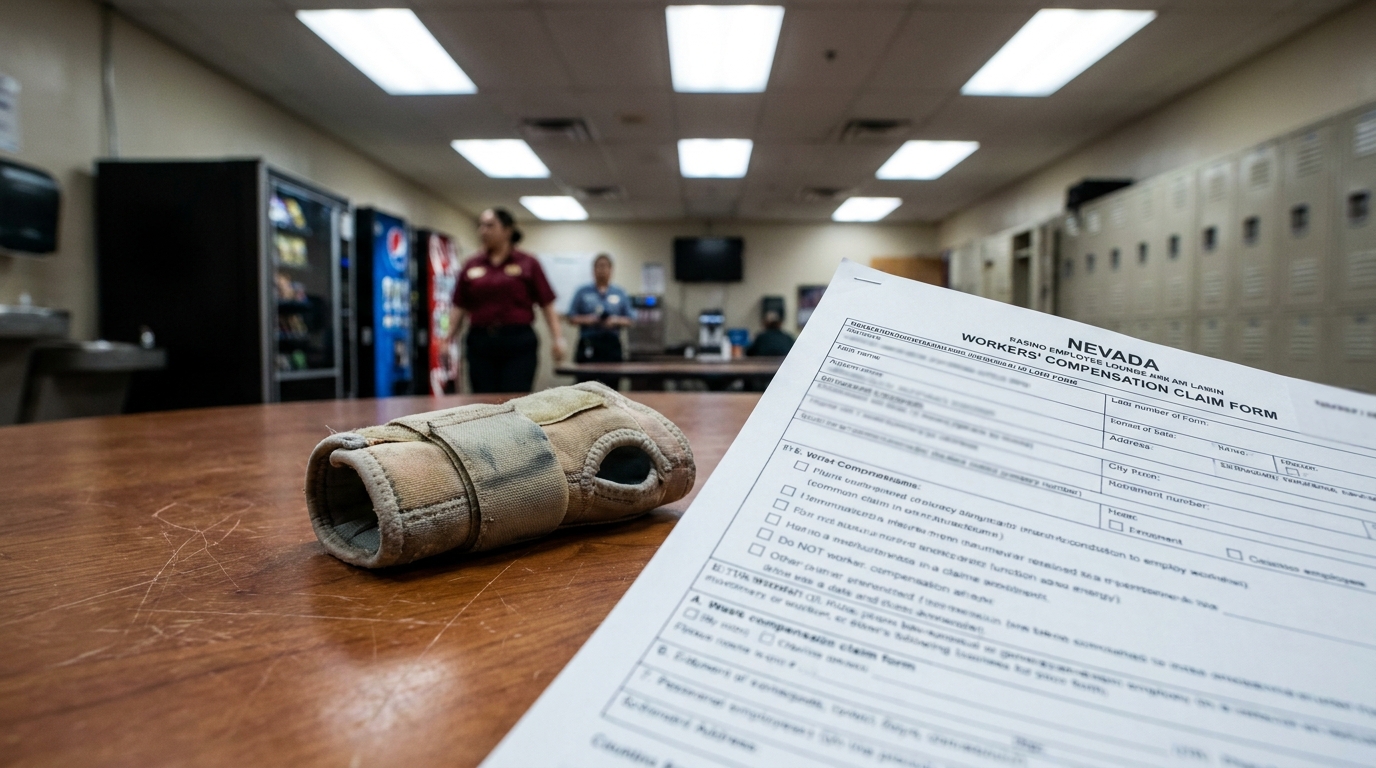

How Carpal Tunnel Syndrome Affects Casino Workers in Las Vegas
Casino employees face uniquely high risk of developing carpal tunnel syndrome due to repetitive daily tasks. Carpal tunnel syndrome results from compression of the median nerve as it passes through the carpal tunnel in the wrist, commonly associated with repeated wrist and hand movements. For dealers, constant shuffling, dealing, and chip handling create exactly the type of repetitive stress that leads to this condition.
Research and case law confirm that table game dealers develop carpal tunnel more frequently than many other workers. Musculoskeletal injuries in casino workers are most common in the upper extremity, back, and legs. OSHA does not have a specific ergonomics standard and addresses ergonomic hazards under the General Duty Clause rather than requiring casinos to maintain written ergonomics plans.
💡 Pro Tip: Keep a personal log of your daily job tasks, including approximate hours spent dealing, number of hands dealt per shift, and any symptoms you notice. This documentation can strengthen a workers’ comp claim.

Carpal Tunnel Workers Compensation Nevada: The Legal Framework
Nevada law treats carpal tunnel syndrome as an occupational disease rather than a single workplace accident. Under NRS 617.440, an occupational disease must meet several requirements: direct causal connection between workplace conditions and the disease, it must follow as a natural incident of the work, be fairly traceable to employment as proximate cause, and not come from a hazard to which workers would have been equally exposed outside of employment. Under NRS 617.440(2), the disease must be "incidental to the character of the business and not independent of the relation of the employer and employee."
The Nevada Supreme Court established the analytical framework for occupational disease claims in Palmer v. Del Webb’s High Sierra, 838 P.2d 435 (Nev. 1992). This landmark occupational disease ruling requires claimants to demonstrate: (1) exposure to the disease was greater than or different from what affects the general public, and (2) a recognizable link between the disease and a distinctive feature of the claimant’s job. For casino dealers spending eight or more hours daily performing repetitive wrist motions, this standard is often met.
What Qualifies as an Occupational Disease in Nevada
Not every medical condition qualifies as an occupational disease under Nevada workers’ comp law. The condition must arise from and connect to your specific employment duties, and you must establish the connection by a preponderance of the evidence under NRS 617.358.
The Two-Part Test Applied to Casino Dealers
Casino card dealers generally have a strong argument under both prongs of the Palmer framework. Dealing hundreds of hands per shift involves wrist movements far beyond what an average person performs in daily life, satisfying the first prong. The second prong is supported by the inherently repetitive mechanics of shuffling and dealing cards.
| Palmer Test Element | What You Must Show | Casino Dealer Example |
|---|---|---|
| Prong 1: Greater or different exposure | Your workplace exposure exceeds what the general public experiences | Dealing hundreds of hands per shift involves far more wrist repetition than typical daily activities |
| Prong 2: Recognizable link to job | A distinctive feature of your job connects to the disease | Card shuffling, dealing, and chip handling are unique, repetitive wrist-intensive duties |
| NRS 617.440(2) requirement | Disease is incidental to the character of the business | Table games are central to casino operations, making dealer injuries incidental to the business |
💡 Pro Tip: Ask your doctor for a detailed medical report that specifically connects the diagnosis to your work activities. A clear medical opinion linking your condition to repetitive job duties strengthens both prongs of the Palmer test.
Free Consultation We’ll help you win the benefits you need to get your life back.
What Happens When a Casino Employer Denies Your Claim
Claim denials are common, but they are not the final word. Nevada case law demonstrates that injured casino workers can successfully overturn denials through the hearing process. In a notable case, two Circus Circus blackjack dealers filed workers’ comp claims alleging that repeated wrist movements from dealing cards caused their carpal tunnel syndrome. The self-insured employer denied both claims outright.
A hearing officer reversed those denials, finding the carpal tunnel claims compensable as occupational diseases. The hearing officer ordered Circus Circus to accept the claims and pay benefits. When the employer resisted, the Nevada Supreme Court ruled that a self-insured employer must comply with a hearing officer’s order absent a stay.
Self-Insured Employers and Your Rights
Many large Las Vegas casinos are self-insured, meaning they handle their own workers’ comp claims internally rather than through a third-party insurer. This arrangement can mean the same company you work for decides whether to approve or deny your claim.
Self-insured employers are still bound by the same Nevada workers’ comp laws and hearing officer decisions. If your claim is denied, you have the right to request a hearing, present medical evidence, and challenge the denial. The Circus Circus case confirms that hearing officers and courts may side with injured workers when evidence supports compensability.
💡 Pro Tip: If your employer denies your carpal tunnel claim, do not assume the denial is final. Nevada law provides an appeals process, and hearing officers have authority to reverse denials.
Steps to Protect Your Casino Worker Carpal Tunnel Claim
Taking the right steps early can make the difference between a successful claim and a denied one. Nevada workers’ compensation is a no-fault system, but you must establish that your carpal tunnel qualifies as an occupational disease.
Key actions to take if you develop carpal tunnel symptoms:
- Report your condition to your employer promptly. Nevada requires you to provide written notice of an occupational disease to your employer within 7 days of when you knew or should have known your condition was work-related (NRS 617.342), and to file a formal claim for compensation with the insurer within 90 days of that knowledge (NRS 617.344); missing either deadline can bar your claim under NRS 617.346.
- Seek medical evaluation from a qualified physician. Describe your job duties in detail so the doctor can assess whether your condition is work-related.
- Document your work activities and symptoms. Notes about shift length, types of games dealt, and when symptoms began provide valuable evidence.
- File the required workers’ comp forms. The Nevada Workers’ Compensation Section provides forms for injured workers, employers, insurers, and medical providers.
- Consult an attorney if your claim is denied or delayed. A Las Vegas workers compensation attorney can guide you through the hearing and appeals process.
💡 Pro Tip: Nevada sets maximum compensation guidelines for workers’ comp benefits on a fiscal-year basis. Understanding current benefit caps helps set realistic expectations.
OSHA Requirements and Casino Employer Responsibilities
Federal safety regulations place specific obligations on casino employers to protect workers from repetitive stress injuries. OSHA does not have a specific ergonomics standard and addresses ergonomic hazards under the General Duty Clause; OSHA does require written safety plans for certain specific hazards (for example, bloodborne pathogens and respiratory protection), but it does not generally require a written ergonomics plan for casinos.
While workers’ comp in Nevada is a no-fault system, an employer’s failure to address known ergonomic hazards does not give rise to a separate negligence lawsuit because Nevada’s workers’ comp system provides the exclusive remedy against employers for workplace injuries. However, if a third party such as an equipment manufacturer contributed to your condition, a separate claim may be possible. If you are experiencing symptoms of a repetitive stress injury, it is worth understanding your workers’ comp rights.
💡 Pro Tip: Check whether your casino employer offers wrist supports, rotation schedules, or break policies for dealers. Note this information for your claim file.
Frequently Asked Questions
1. Can I file a carpal tunnel workers comp claim if I work as a casino dealer in Las Vegas?
Yes, in many cases you can. Nevada courts have recognized carpal tunnel syndrome as a compensable occupational disease for casino dealers. Under the Palmer framework, you need to show that your exposure exceeded the general public’s and that a distinctive feature of your job caused the condition. Card dealing involves repetitive wrist movements that courts have found sufficient.
2. What if my employer denies my carpal tunnel claim?
A denial is not the end of your claim. Nevada law allows you to request a hearing before a hearing officer, who can review evidence and reverse the denial. In the Circus Circus case, a hearing officer overturned claim denials for two blackjack dealers and ordered the employer to pay benefits.
3. Does it matter that my casino employer is self-insured?
Self-insured employers must follow the same Nevada workers’ comp rules as all other employers. While a self-insured casino handles claims internally, it remains bound by hearing officer decisions. You retain the same right to challenge a denial.
4. How long do I have to file a workers’ comp claim for carpal tunnel in Nevada?
Nevada requires you to provide written notice of an occupational disease to your employer within 7 days of when you knew or should have known your condition was work-related (NRS 617.342), and to file a formal claim for compensation with the insurer within 90 days of that knowledge (NRS 617.344). Because carpal tunnel often develops gradually, the discovery date may differ from when symptoms first appeared. File as early as possible.
5. What benefits might I receive for a carpal tunnel workers comp claim in Nevada?
Workers’ comp benefits for carpal tunnel may include medical treatment, temporary total or partial disability payments, permanent partial disability ratings, and vocational rehabilitation, subject to Nevada’s maximum compensation guidelines. Specific benefits depend on condition severity and impact on your ability to work.
Protecting Your Livelihood After a Casino Workplace Injury
Carpal tunnel syndrome from a Las Vegas casino job is a serious condition with real legal protections under Nevada workers’ compensation law. Courts have repeatedly sided with casino employees who demonstrate the link between their repetitive job duties and their diagnosis. Knowing your rights under NRS 617.440 and the Palmer framework puts you in a stronger position to secure the benefits you deserve.
If you are a casino worker dealing with carpal tunnel or another repetitive stress injury, Shook and Stone is ready to help you navigate the process. Call 702-570-0000 or contact us today for a case evaluation.





 DIRECTIONS